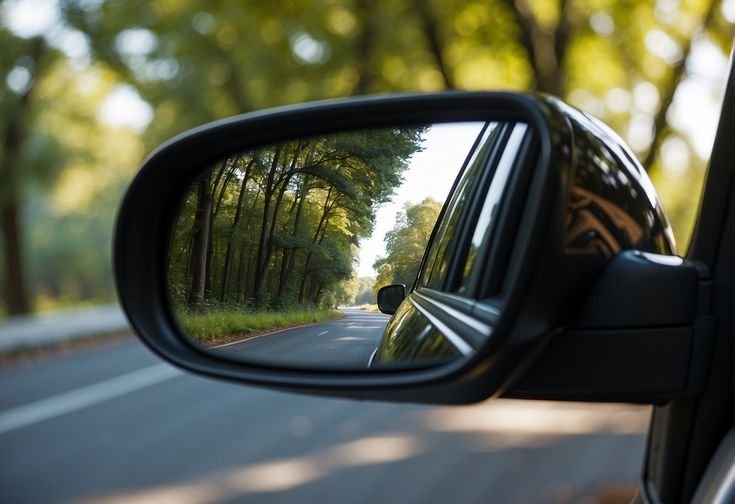
Every safe driver knows that good observation is the foundation of responsible driving. While steering, braking, and accelerating are essential skills, one habit often separates confident drivers from inexperienced ones—regularly checking your mirrors.
Your vehicle’s mirrors provide valuable information about what’s happening around you. They help you monitor traffic, spot potential hazards, and make safer decisions before changing speed or direction.
Whether you’re a learner driver or an experienced motorist, understanding how to use your mirrors correctly can significantly improve your road safety and reduce the risk of accidents.
In this guide, we’ll explain why mirrors are so important, how to use them effectively, and the common mistakes drivers should avoid.
Why Are Mirrors So Important?
Mirrors allow you to see areas that aren’t directly visible through your windscreen. They help you stay aware of vehicles, cyclists, motorcyclists, and pedestrians around your car.
Using your mirrors properly helps you:
- Stay aware of surrounding traffic
- Change lanes safely
- Monitor vehicles approaching from behind
- Reverse with greater confidence
- Prepare for turns and junctions
- Respond quickly to changing road conditions
Good mirror use gives you more time to make safe decisions.
Understanding the Three Main Mirrors
Every vehicle is equipped with three primary mirrors, and each serves a different purpose.
1. Rear-View Mirror
The rear-view mirror provides a clear view of the traffic directly behind your vehicle.
Use it to:
- Monitor vehicles following you
- Observe traffic before braking
- Watch approaching emergency vehicles
- Maintain awareness of changing traffic conditions
This mirror should be adjusted before you begin driving.
2. Right Side Mirror
The right side mirror helps you monitor traffic on the right-hand side of your vehicle.
It is especially useful when:
- Changing lanes
- Merging into traffic
- Parking
- Reversing
Always combine mirror checks with a shoulder check before moving across.
3. Left Side Mirror
The left side mirror allows you to monitor vehicles, cyclists, and pedestrians on the left-hand side.
It is important when:
- Turning left
- Parking
- Pulling away from the kerb
- Changing lanes
Proper adjustment helps minimise blind spots.
When Should You Check Your Mirrors?
Mirror checks should become a natural part of your driving routine.
You should check your mirrors:
Before moving off
Ensure it is safe before entering traffic.
Before braking
Know what is happening behind you before reducing speed.
Before turning
Check for vehicles, cyclists, or motorcyclists approaching from behind.
Before changing lanes
Confirm the lane is clear before moving across.
Before overtaking
Ensure it is safe before pulling out.
Before merging
Check traffic conditions before joining another road.
Before reversing
Observe your surroundings carefully.
Every 5–8 seconds while driving
Regular mirror checks help maintain awareness of changing traffic conditions.
The Mirror–Signal–Shoulder Check–Move Routine
One of the safest habits every driver should develop is following this sequence:
- Mirror – Check your mirrors to assess surrounding traffic.
- Signal – Let other road users know your intentions.
- Shoulder Check – Check your blind spot for anything your mirrors can’t show.
- Move – Change lanes or direction only when it is safe.
Using this routine consistently helps reduce the risk of collisions.
What Are Blind Spots?
Blind spots are areas around your vehicle that cannot be seen in your mirrors.
Even with correctly adjusted mirrors, some vehicles, cyclists, or motorcyclists may remain hidden.
Always perform a quick shoulder check before:
- Changing lanes
- Merging
- Overtaking
- Pulling away from the kerb
A shoulder check takes only a second but can prevent serious accidents.
Common Mirror Mistakes Beginner Drivers Make
Many learner drivers lose marks on driving tests because they don’t use their mirrors correctly.
Some common mistakes include:
- Forgetting to check mirrors before braking
- Not checking mirrors before turning
- Looking at mirrors too briefly
- Relying only on mirrors without checking blind spots
- Checking mirrors too late
- Driving for long periods without checking mirrors
Developing good mirror habits early makes you a safer driver.
Tips for Effective Mirror Use
Follow these simple tips to improve your observation skills:
- Adjust all mirrors before starting your journey.
- Check mirrors every few seconds.
- Make mirror checks smooth and natural.
- Don’t stare at the mirrors for too long.
- Always combine mirror checks with shoulder checks.
- Keep your mirrors clean for maximum visibility.
- Replace damaged mirrors immediately.
How Mirrors Help Prevent Accidents
Proper mirror use can help prevent many common road incidents, including:
- Rear-end collisions
- Unsafe lane changes
- Parking accidents
- Collisions with cyclists
- Side-swipe crashes
- Merging accidents
- Reversing incidents
Many accidents happen simply because drivers fail to observe what’s happening around them.
Practising Good Mirror Habits
If you’re learning to drive, make mirror checks part of every lesson.
A simple way to remember is to ask yourself:
“What’s happening behind me?”
By checking your mirrors regularly, you’ll become more aware of your surroundings and make safer decisions on the road.
Like any driving skill, mirror use improves with consistent practice.
Final Thoughts
Your mirrors are among the most important safety features in your vehicle. They provide essential information that helps you anticipate hazards, make informed decisions, and drive confidently.
Whether you’re preparing for your driving test or simply looking to become a safer driver, developing strong mirror-checking habits will greatly improve your road awareness.
Remember, safe driving isn’t just about looking ahead—it’s about knowing what’s happening all around you.
Improve Your Driving Skills with Apex Academy
At Apex Academy, we teach learners how to develop safe driving habits from day one. Our experienced instructors place a strong emphasis on observation, mirror checks, hazard awareness, and defensive driving techniques to help students become confident and responsible drivers.
Whether you’re a complete beginner or preparing for your driving test, we’re here to help you succeed.
Book your driving lesson today and learn to drive with confidence and safety!

 Sydney, NSW, Australia
 1300 123 456
 Info@apexacdemy.com
 Mon–Sun: 8:00 AM – 8:00 PM